
Quick answer
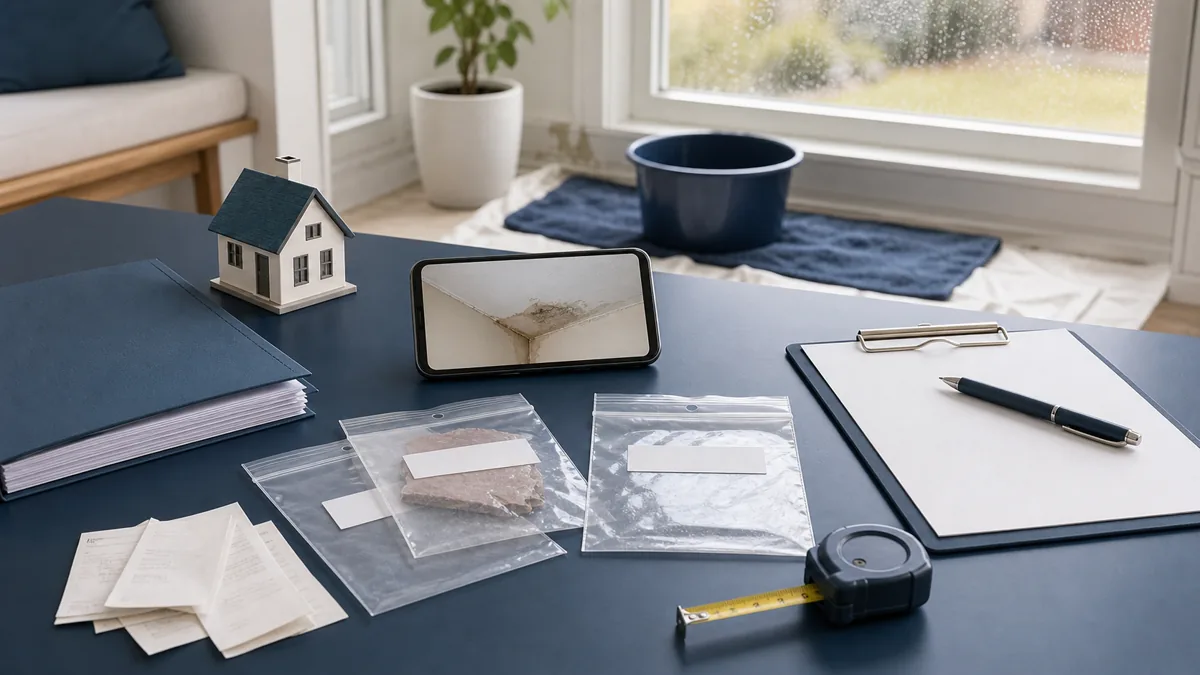
After property damage, protect people first, report the loss promptly, and document conditions before nonemergency cleanup when safe. Create an event timeline, take wide and close photos, inventory damaged property, keep mitigation and temporary-living receipts, and organize every insurer communication by claim number.
Start with safety and loss prevention
Do not enter a building with structural, electrical, gas, fire, floodwater or contamination hazards. Follow emergency authorities and qualified professionals. When safe, take reasonable steps to prevent further damage, but avoid permanent repairs or disposal until the insurer explains documentation requirements.
Coverage and duties after loss come from the policy. Report promptly and ask the claims representative what must be preserved.
Create an event timeline
- Date and approximate time the event began or was discovered.
- Weather, utility, alarm or witness information.
- Emergency calls, shutoffs and temporary protective steps.
- When the insurer, landlord, lender or contractor was contacted.
- Every inspection, estimate, payment and repair milestone.
Use factual observations. “Water visible below the upstairs bathroom at 8:10 a.m.” is more useful than an unsupported diagnosis.
Take photographs that explain the loss
- Begin outside or at the room entrance with a wide view.
- Take midrange photos that connect damage to the room or building feature.
- Add close photos of specific materials and items.
- Use a ruler or reference object when scale matters.
- Photograph model and serial numbers safely.
- Preserve original files and metadata; work from copies when annotating.
Build a damaged-property inventory
| Field | Useful detail | Supporting evidence |
|---|---|---|
| Item | Plain description and quantity | Room photos or prior inventory |
| Identity | Brand, model, age and serial number if known | Receipt, manual or order history |
| Condition | Observed damage and whether retained | Photos and professional report |
| Cost | Original cost and current replacement research | Receipts and comparable listings |
| Claim status | Submitted, inspected, approved or disputed | Adjuster communication |
The NAIC recommends maintaining a home inventory with photos and receipts before a loss. If no inventory exists, prior phone photos, retailer histories and family records may help reconstruct one.
Track four expense categories separately
Emergency mitigation
Board-up, water extraction, temporary roof protection and other work intended to prevent more damage.
Permanent repair
Contractor estimates, scopes, permits, materials and change orders for restoring the property.
Personal property
Cleaning, repair or replacement of damaged belongings.
Additional living expenses
Extra, policy-eligible costs incurred because a covered loss makes the home uninhabitable, subject to limits and documentation.
Organize insurer communications
Record the claim number, contact name, date, decision and next required action. Confirm important conversations in writing. Ask which deductible applies, whether depreciation is withheld, what proof releases recoverable depreciation, and whether repairs need approval before work begins.
Use the claims process guide, home inventory checklist and ALE explainer for the related steps.
Contractor documentation
- Written scope with labor, materials, taxes and permits.
- Photos or testing that support hidden work.
- Separate emergency, demolition and rebuild charges.
- Change orders showing price and schedule effects.
- Final invoice, payment proof, warranty and completion photos.
Do not sign blank forms or let urgency replace normal contractor checks. Ask the insurer how it handles assignments, direct payments and supplemental estimates.
Create one claim file that another person can understand
Use folders for policy documents, event photos, personal property, building estimates, mitigation, living expenses and insurer communications. Name files with the date, room and subject. Keep a simple index showing what was submitted, when it was sent and whether the insurer acknowledged receipt.
Reconcile estimates line by line
Contractor and insurer estimates may use different quantities, material descriptions or repair methods. Compare scope before comparing totals. Mark missing rooms, labor, code items, taxes, permits and demolition separately, then send supporting evidence through the designated claims process. An unexplained total-price disagreement is harder to evaluate.
Protect sensitive information
Claim records can contain addresses, account information, photographs of belongings and temporary locations. Use the insurer's secure channel, restrict shared-folder access and retain backups. Redact unrelated personal data from contractor copies while preserving originals for the claim.
Frequently asked questions
Should damaged items be thrown away?
Preserve them when safe until the insurer gives instructions. Photograph contamination or disposal requirements and retain professional records.
Do I need perfect receipts?
No, but stronger evidence can make identification and valuation easier. Combine photos, statements, manuals and purchase histories.
Can I begin repairs immediately?
Emergency protection may be necessary. For permanent work, understand policy duties and inspection requirements first whenever conditions allow.