
Quick answer
Inspect a rental property between tenants with a consistent room-by-room route, dated photos and a written condition record. Address life-safety and active damage first, distinguish normal wear from tenant-caused damage under local law, and document completed repairs before the next move-in.
Why the between-tenant inspection matters
A turnover inspection is the handoff between two condition records. It helps a landlord identify urgent hazards, scope repairs, update appliances and systems, and prepare accurate move-in documentation. It should not be improvised around a security-deposit deadline.
Entry, notice, deposit deductions, required habitability items and documentation rules vary by state and locality. Use this operational checklist alongside the lease and local legal requirements.
Prepare before entering
- Confirm lawful possession, notice and key-control procedures.
- Bring the prior move-in report, lease notes and maintenance history.
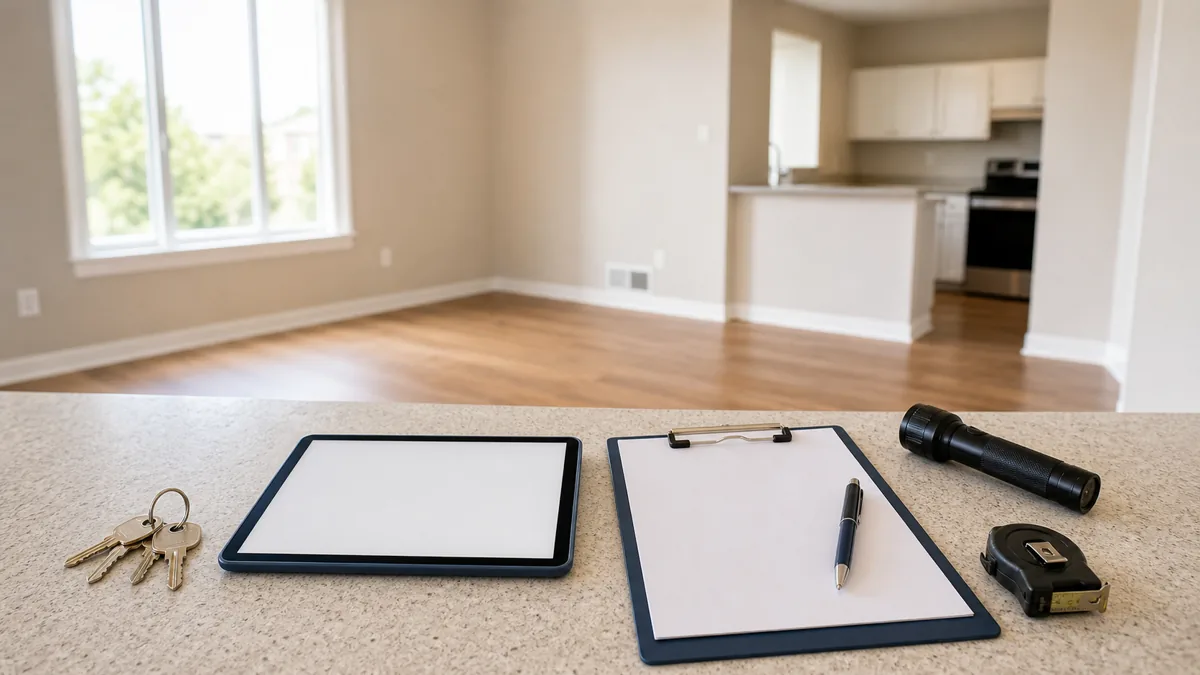
- Use a charged phone or camera, flashlight, outlet tester if qualified, tape measure and labels.
- Arrange a second person or specialist if there are safety concerns.
- Do not enter areas with suspected gas, electrical, structural or contamination hazards.
Follow the same inspection route every time
| Area | Check | Record |
|---|---|---|
| Exterior and entry | Address numbers, locks, lighting, steps, rails, drainage and visible damage | Wide photos plus closeups of defects |
| Kitchen | Leaks, shutoffs, cabinets, counters, appliances, outlets and ventilation | Model numbers and operational notes |
| Bathrooms | Water flow, drainage, seals, ventilation, moisture and secure fixtures | Stains, meter observations and repair priority |
| Living and bedrooms | Windows, doors, walls, floors, alarms, heat and cooling | Room overview from consistent positions |
| Systems and utility areas | Panel, water heater, HVAC, filters, meters and shutoffs | Service dates and professional follow-up |
HUD's NSPIRE framework organizes housing inspection around inside, outside and unit areas and prioritizes health and safety conditions. Even when a private rental is not subject to HUD inspection, this is a useful reminder to inspect the whole property rather than only visible finishes.
Sort findings into three buckets
Safety or active damage
Gas odor, exposed electrical hazards, failed locks, active leaks, missing required alarms, unstable rails and similar conditions receive immediate attention.
Routine turnover and normal wear
Cleaning, expected paint wear, filters, minor adjustments and aging components belong in the operating plan unless local rules say otherwise.
Possible tenant-caused damage
Compare the prior condition report, photos, work orders and lease. Do not classify or charge based only on the current appearance.
Create repair tickets that vendors can use
Each ticket should name the room, describe the observed condition, state the desired outcome, include photos and identify access or safety constraints. Avoid diagnosing work outside your expertise. “Active moisture below the kitchen sink; identify and stop source” is more useful than guessing which hidden fitting failed.
Track assigned vendor, approval limit, appointment, completion evidence and invoice. Link the final record back to the inspection item.
Plan the turnover sequence
- Secure the property and address urgent hazards.
- Complete diagnostics, leak repairs and intrusive work.
- Perform electrical, plumbing, HVAC and appliance work.
- Patch, paint and complete finish repairs.
- Deep clean and treat pests if needed.
- Conduct a quality-control inspection.
- Create the new move-in condition record.
This order reduces rework. Cleaning before dusty repairs or painting before a leak is resolved wastes time and money.
Keep security-deposit accounting separate
The cost of preparing a unit is not automatically chargeable to the former tenant. Separate owner turnover expenses from any proposed deduction, follow state-specific deadlines and evidence rules, and keep invoices and calculations. Review the security-deposit accounting guide for the tax distinction between refundable deposits and retained amounts.
Close out before advertising or move-in
- Verify every life-safety item and required utility.
- Retest repaired fixtures and appliances.
- Photograph each room after cleaning and repairs.
- Record keys, remotes, filters and meter readings.
- Update manuals, emergency contacts and maintenance dates.
- Budget actual turnover cost and vacancy days for the next cycle.
Use the turnover cost checklist to connect these tasks to vacancy, utilities, labor and leasing costs.
Frequently asked questions
Can a landlord photograph a tenant's belongings?
Privacy and entry rules vary. Limit documentation to a lawful purpose, follow notice requirements and protect personal information.
What counts as normal wear?
The definition depends on local law, tenancy length, expected useful life and evidence. Compare dated condition records and obtain legal guidance for disputed deductions.
Should every repair be completed before listing?
Safety, habitability and accurate advertising come first. If a lawful unfinished item remains, document the plan and do not misrepresent the property's condition.
When reviewing move-out findings, apply the normal wear and tear vs. tenant damage framework before assigning costs.