
Quick answer
If you suspect a hidden plumbing leak, stop all intentional water use, check the meter, inspect toilets and fixtures, and document stains, odors or moisture. Shut off water when active leakage threatens the property. A meter test can confirm unexplained use, but locating and repairing the source may require a licensed plumber or leak-detection professional.
Why small leaks are easy to miss
A slow toilet leak, irrigation fault, appliance connection or pipe inside a wall may not produce a visible puddle. The first signs can be a higher bill, a musty odor, damaged paint, warm flooring, cabinet swelling or a water meter that moves when no fixture should be operating.
The U.S. Environmental Protection Agency reports that household leaks can waste substantial amounts of water. A repeatable checklist helps separate normal use from a problem that needs repair.
First: protect people and property
- Keep away from sagging ceilings, wet electrical equipment and contaminated water.
- Use the fixture or main shutoff if water is actively damaging the home and it is safe to do so.
- Call emergency services or the appropriate utility for a gas, electrical or structural hazard.
- Photograph the condition before moving items, then protect valuables from further water.
Run a basic water-meter test
- Turn off faucets and confirm appliances, irrigation, humidifiers and water treatment equipment are not using water.
- Record the meter reading or photograph the leak indicator.
- Wait without using water, following the meter or utility's instructions.
- Check again. Movement suggests water is flowing somewhere on the metered side.
- Repeat after isolating likely systems if safe and practical.
Meter types differ, and some devices use water automatically. The test identifies unexplained flow; it does not prove the exact location.
Check common quiet leaks
| Area | What to look for | Low-risk check |
|---|---|---|
| Toilets | Refilling sounds, bowl movement or a worn flapper | Use a dye test following EPA guidance |
| Under sinks | Corrosion, swollen cabinet panels or damp supply lines | Dry the area and check connections with a paper towel |
| Appliances | Damaged hoses, stained flooring or moisture behind units | Inspect accessible connections without pulling unsafe equipment |
| Water heater | Drips, pan water or discharge near the relief line | Observe only; do not cap or alter safety devices |
| Irrigation and exterior | Soggy patches, running valve boxes or unexpected winter use | Review controller settings and visible zones |
Read the building clues
Map stains and moisture to the spaces above, below and beside them. Water can travel along pipes and framing, so the visible damage may not be directly under the source. Record when the sign appears: during rain, after a shower, while a dishwasher runs or continuously. That timing is valuable diagnostic information.
- Intermittent stain after rain: also investigate roof and exterior drainage.
- Warm spot on a slab: discuss supply piping and heating systems with a qualified professional.
- Musty cabinet or wall: check plumbing, condensation and exterior moisture.
- Meter movement with the main house isolation closed: ask the utility or plumber about the service-line side.
When to call a professional
Call promptly when the meter shows unexplained continuous use, water is inside a wall or ceiling, the shutoff will not operate, pressure changes suddenly, or damage involves electrical systems, sewage or structural materials. Leak-detection tools can narrow the search without opening every surface, but the method should match the pipe and building assembly.
Document the repair and drying
Save the diagnosed source, repair invoice, photographs and moisture or drying records. Recheck the meter after work. Damaged drywall, insulation, flooring and cabinetry may need assessment even after the pipe is fixed. Moisture control and material restoration are separate tasks.
If damage is significant, use the water damage cleanup checklist. Review your policy and contact the insurer when appropriate; avoid assuming every slow leak or resulting loss is covered.
Prevent the next surprise
- Know where the main and fixture shutoffs are.
- Inspect accessible hoses and supply lines regularly.
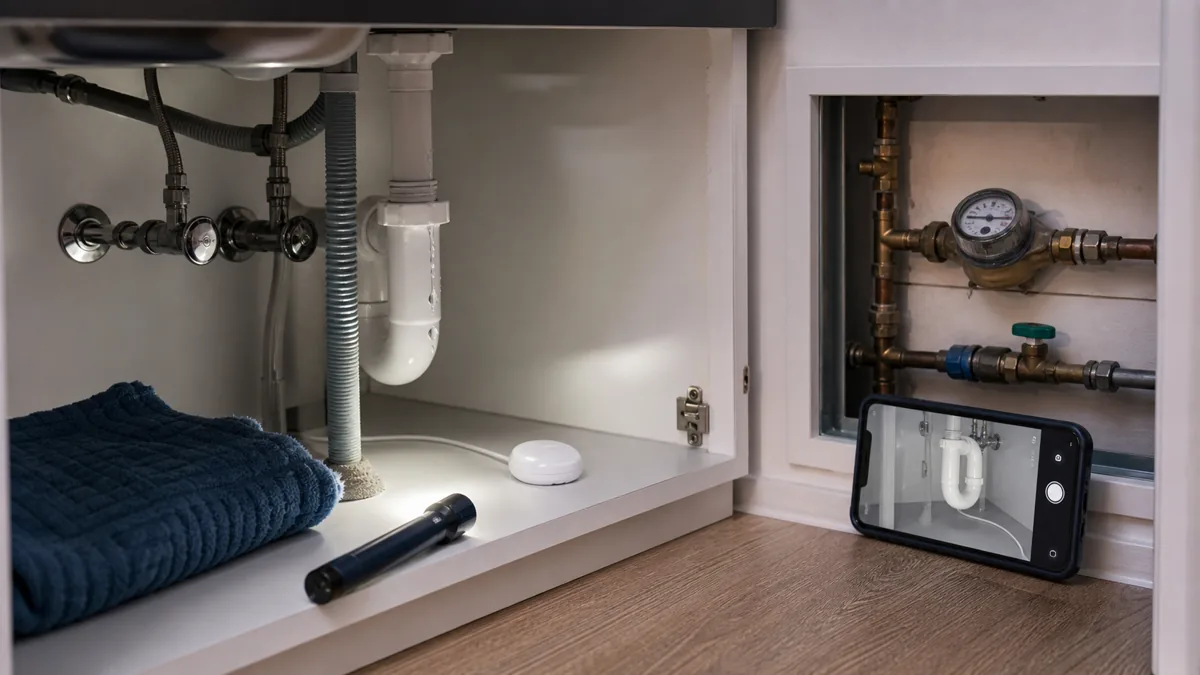
- Use pans or sensors in appropriate high-risk areas.
- Track normal seasonal water use so changes stand out.
- Address drainage and humidity as well as plumbing.
Frequently asked questions
Does a moving meter always mean a leak?
It means water is flowing, but an automatic appliance, irrigation system or treatment device may explain it. Isolate intended uses before concluding there is a leak.
Can I use a moisture meter myself?
A consumer meter can help compare areas, but material, depth and device settings affect readings. Use it as evidence, not a complete diagnosis.
Should I open a wall?
Not as a first step. Consider safety, possible utilities, hazardous materials and less-invasive detection. A qualified professional can choose an appropriate access point.