
Quick answer
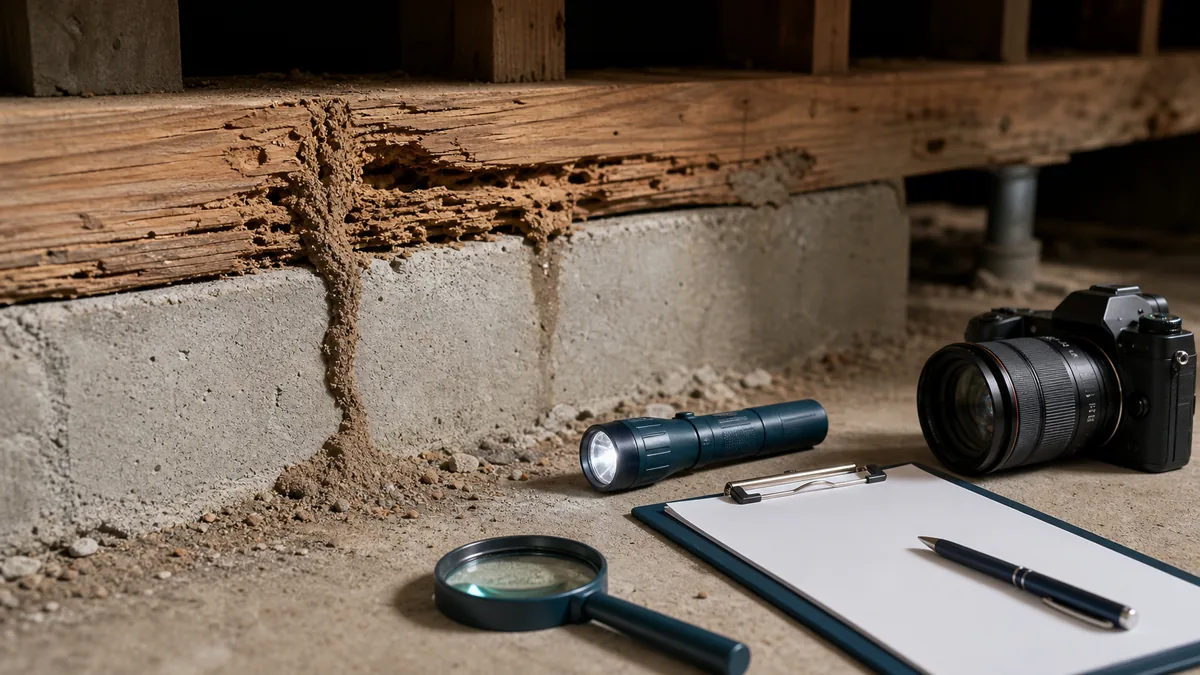
Possible termite warning signs include mud tubes, winged swarms or discarded wings, and wood that sounds hollow or shows internal galleries. Photograph the location, avoid disturbing a large area, address obvious moisture sources and arrange an inspection by a properly licensed pest professional. Termite treatment and structural repair are separate scopes.
Common termite warning signs
Termites often remain inside soil, shelter tubes or wood, so an infestation may not be obvious until a swarm appears or damaged material is opened during construction. The U.S. Environmental Protection Agency recommends looking for hollow spots in exposed wood and learning to distinguish termite swarms from ant swarms.
- Earthen mud tubes running across foundation walls, piers or wood
- Winged insects emerging indoors or near the foundation
- Piles of similarly sized discarded wings near windows or lights
- Wood that sounds hollow, feels soft or reveals layered galleries
- Paint that bubbles or trim that changes shape without an obvious plumbing leak
- Small pellets associated with some drywood termite activity
One sign is not a complete diagnosis. Carpenter ants, wood-boring beetles, rot and water damage can produce different but sometimes confusing evidence.
Termite swarm or flying ants?
| Feature | Termite | Ant |
|---|---|---|
| Wings | Front and rear wings are roughly equal in length | Front wings are typically longer |
| Antennae | Generally straight | Usually elbowed |
| Body shape | Broad waist | Pinched waist |
Do not rely on a web photo alone. Save a specimen in a small sealed container or take a close, well-lit photograph for the inspector.
What to document before the visit
- Photograph the wide area, then a close view with a ruler for scale.
- Mark each location on a simple floor plan.
- Note the date, weather and whether insects were active.
- Record nearby leaks, drainage problems, wood piles or soil-to-wood contact.
- List recent repairs, pest treatments and warranties.
Avoid scraping away every mud tube or opening large structural areas before the professional sees them. Do not spray an unknown pesticide into walls. Poorly placed treatment can create exposure risks and can make evidence harder to interpret.
Reduce conditions that attract activity
EPA prevention guidance emphasizes keeping soil around the foundation dry through grading and drainage, fixing leaks, reducing foundation openings and keeping wood debris away from the house. Maintain clear access to foundation edges and vents so new evidence can be seen.
Check gutters and downspouts with the drainage maintenance guide. Use the crawl-space moisture guide when damp soil, condensation or blocked vents are present. Moisture correction supports prevention, but it does not replace treatment of an active colony.
What a useful inspection should cover
Ask the inspector to identify the suspected termite type, accessible evidence, inaccessible areas, moisture conditions and whether further opening is recommended. The written report should distinguish active evidence from old damage where possible and identify the proposed treatment zone.
- Inspector and company license information required by the state
- Diagram showing evidence and inaccessible areas
- Treatment method, product, application locations and safety instructions
- Preparation steps, follow-up inspection schedule and warranty conditions
- Items excluded from the quote, including structural repair
Compare treatment and repair separately
Treatment approaches can include soil-applied products, baits and localized wood or void treatments. The appropriate method depends on the termite species, construction and infestation. EPA notes that pesticide labels carry legally enforceable directions; consumers should use registered products as directed and understand who is permitted to apply them.
After activity is addressed, damaged framing may need evaluation by a qualified contractor or structural professional. Cosmetic patching can hide the extent of damage. If cracking or movement is also present, review the foundation warning-sign guide without assuming termites caused every symptom.
Questions for each company
- What evidence supports the diagnosis and is activity considered current?
- Which areas could not be inspected?
- Why does this treatment fit the species and structure?
- What must occupants or pets do before and after application?
- What inspections keep the warranty valid?
- Does the warranty cover retreatment, repair or only specified services?
Frequently asked questions
Does seeing one mud tube prove there is major structural damage?
No. It warrants inspection, but visible evidence does not reveal the full location, age or severity of activity.
Can I treat termites myself?
Termite treatment can require specialized products, application equipment and licensing. Follow federal labels and state rules; a licensed professional is often appropriate.
Does homeowners insurance cover termite damage?
Do not assume it does. Policies often distinguish sudden covered events from maintenance or infestation. Read the policy and ask the insurer about the specific facts.
Sources
- U.S. EPA: How to identify and control termites
- U.S. EPA: Pest-control resources for residents
- U.S. EPA: About pesticide registration
Sources were checked on July 28, 2026. Policy terms, lending practices, product availability and state or local requirements can change.