Quick answer
For a limited area on a hard surface, homeowners may be able to clean mold with detergent and water after fixing the moisture source and using appropriate protection. Larger areas, sewage contamination, hidden growth, HVAC involvement or significant health concerns are reasons to consult an experienced remediation professional.
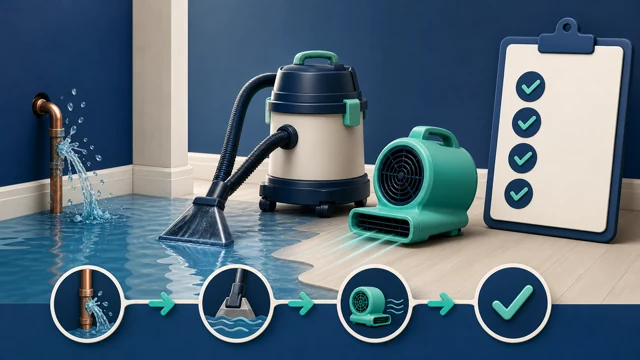
Fix water before focusing on appearance
Mold growth indicates a moisture condition. Find and correct roof leaks, plumbing leaks, groundwater entry, condensation, ventilation problems or indoor humidity before repainting or replacing finishes.
EPA guidance emphasizes drying water-damaged areas and materials within roughly 24 to 48 hours when possible. That target is not a guarantee, but rapid drying reduces the opportunity for growth.
Decide whether the material can be cleaned
Hard, nonporous surfaces can often be scrubbed with detergent and water and dried completely. Porous materials such as ceiling tile, carpet pad, insulation and some drywall may be difficult to clean thoroughly and may require removal.
Do not simply cover mold with paint or caulk. Encapsulation without cleaning and moisture correction can hide an active problem rather than solve it.
When professional remediation makes sense
Professional help is prudent when the affected area is extensive, water is contaminated, the HVAC system may be involved, growth is hidden inside assemblies or occupants have significant health vulnerabilities. Local licensing and certification rules vary.
Ask for a written scope that separates moisture correction, containment, removal, cleaning, drying and post-work verification. A vague proposal that focuses only on spraying a product may not address the building problem.
Protect occupants and avoid spreading contamination
Limit access to the work area, avoid dry brushing or aggressive disturbance that spreads dust and spores, and use protective equipment appropriate to the task. Never mix cleaning chemicals.
If flooding or sewage is involved, follow disaster-cleanup guidance and consider additional biological and chemical hazards. Electrical, structural and asbestos or lead-paint risks may also change the safe work method.
Document the cause and completed work
Photograph affected areas before removal, record moisture readings when available and keep invoices, reports and repair details. Documentation can help with insurance discussions, future maintenance and a later property sale.
After cleanup, monitor humidity, odors and the repaired area. Recurring staining or dampness means the moisture pathway was not fully corrected.
Mold Cleanup and Remediation checklist
- Identify and stop the water source
- Photograph damage before removal
- Separate cleanable and disposable materials
- Use qualified help for large or contaminated areas
- Dry the area completely
- Monitor for recurring moisture
Frequently asked questions
Should I use bleach on mold?
EPA does not recommend routine biocide use as the core approach. Mold must be removed and the moisture problem corrected; dead mold can still cause reactions.
Do I always need mold testing?
Visible growth and a known moisture problem may provide enough information to act. Testing can be useful in selected cases, but it should answer a defined question.
Can moldy drywall be cleaned?
Porous materials can be difficult to clean completely. The extent, material condition and contamination source determine whether removal is appropriate.
Research transparency
How this guide was prepared
This guide summarizes publicly available U.S. government, regulator or industry-source material listed below. It explains planning concepts and questions to verify; it does not provide a property-specific quote, inspection, coverage decision, legal opinion or tax advice.
Sources and references
- Mold cleanup in your home — U.S. Environmental Protection Agency
- Brief guide to mold, moisture and your home — U.S. Environmental Protection Agency
- Homeowner and renter guide after disasters — U.S. Environmental Protection Agency
Sources were checked for this guide on July 27, 2026. Policy terms, tax rules, insurance forms, incentives and local requirements can change.
General-information disclaimer
This guide is for general planning only. It is not a quote, policy interpretation, legal advice, tax advice, engineering advice or a substitute for a licensed professional who can review your property and documents.