
Quick answer
Roof leak clues include ceiling stains, damp attic sheathing, musty odors, wet insulation, peeling paint and moisture around flashing or penetrations. Protect the interior, photograph the timing and location, and arrange a qualified inspection. Do not climb onto a wet, steep or damaged roof.
Why roof leaks are difficult to trace
Water may enter at a roof covering, flashing, valley, vent or wall intersection and travel along sheathing, rafters or fasteners before it becomes visible. The ceiling stain is therefore a destination, not necessarily the entry point.
Condensation and plumbing leaks can produce similar symptoms. Record when the moisture appears before assuming the roof is responsible.
Common warning signs
- New or expanding ceiling and wall stains after rain.
- Damp roof decking, rafters or insulation in the attic.
- Peeling paint, swollen trim or bubbling drywall near the roofline.
- Musty odor in an attic or upper room.
- Daylight visible through an unintended opening.
- Damaged, missing or displaced roof materials visible from the ground.
- Debris, failed sealant or staining around skylights, chimneys and vents.
First steps during active leakage
- Keep people away from sagging ceilings and wet electrical fixtures.
- Move valuables and use a container only when the area is safe.
- Photograph the damage and weather conditions.
- Contact a qualified roofer or emergency mitigation professional.
- Notify the insurer promptly when the event may be covered.
Do not puncture a ceiling, enter a structurally unsafe attic or place a tarp on a roof without appropriate training and fall protection.
Build a leak timeline
| Pattern | Record | Possible investigation |
|---|---|---|
| Only during wind-driven rain | Wind direction and storm intensity | Flashings, sidewalls and penetrations |
| After snow or ice begins melting | Temperature change and roof-edge conditions | Ice, drainage and attic heat flow |
| During bathroom or appliance use | Which fixture was operating | Plumbing or exhaust condensation |
| Continuous dampness | Humidity, recent weather and material readings | Hidden moisture and ventilation |
Inspect from safe locations
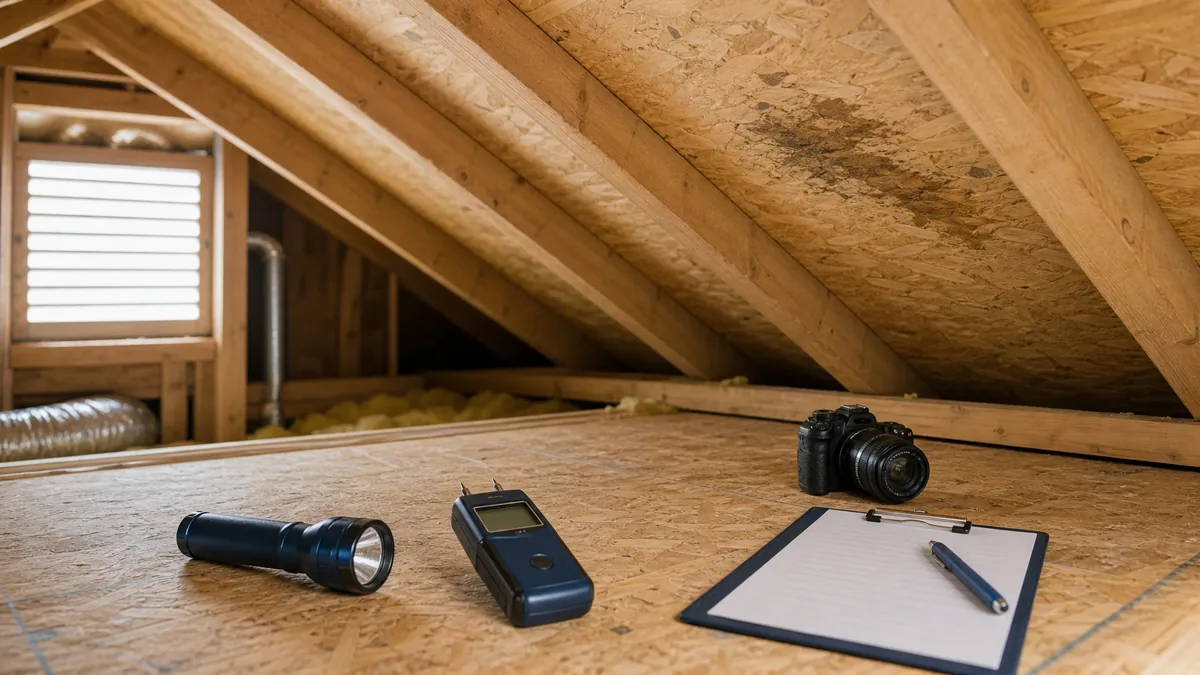
From the ground, look for displaced materials, damaged flashing, clogged drainage or tree impact. In an accessible attic, use stable walking surfaces and a flashlight; do not step between framing members or touch wet wiring. Photograph wide context and close detail.
DOE building-science guidance identifies valleys and roof penetrations as vulnerable water-entry areas and emphasizes integrated barriers and flashing. A qualified inspection should consider the roof assembly, not only the visible stain.
Drying and repair are separate jobs
Stopping the entry point prevents additional water, but wet insulation, sheathing, ceilings and finishes still need assessment and drying. EPA guidance emphasizes controlling the moisture source and drying wet materials promptly to reduce conditions that support mold growth.
Use the water damage cleanup checklist and mold decision guide when interior materials are affected.
Questions for the roofing proposal
- What observed entry path explains the interior evidence?
- Is the repair temporary or intended as a durable correction?
- Which underlayment, flashing and adjacent materials need inspection?
- Will damaged decking or insulation be accessible?
- What photos, warranty, permit or maintenance records will be provided?
Prevent repeat leaks
Schedule safe roof and gutter reviews after severe weather and before known wet seasons. Maintain drainage, trim hazards through qualified professionals, and save a roof-age and repair history. Follow the roof maintenance checklist for routine planning.
Prepare an evidence package for the roofer
Send a short timeline, exterior ground-level photos, interior wide views and attic observations before the appointment. Mark the stain location on a simple floor plan and note which storms produced moisture. Include roof age, prior repairs, solar panels, skylights and any warranty information. This helps the inspector plan access without treating your suspected cause as established fact.
Ask how the diagnosis was tested
A proposal should connect the observed defect with the moisture path. Ask whether the contractor inspected adjacent flashing, underlayment, decking and penetrations; whether a controlled water test is appropriate; and how repaired work will be verified. Avoid indiscriminate hose testing that can create new damage or enter electrical areas.
Monitor after the repair
Keep before-and-after photos and check the area during comparable weather. A dry surface immediately after repair does not prove concealed materials are dry. Follow professional drying measurements and continue monitoring odor, staining and material condition.
Frequently asked questions
Can I find the source by following the stain upward?
Sometimes, but water can travel sideways or follow framing. Treat it as one clue.
Should I seal the visible spot from inside?
An interior patch may hide evidence without stopping exterior entry. Diagnose the water path first.
Does homeowners insurance cover a roof leak?
Coverage depends on the cause, policy terms, exclusions, roof settlement provisions and maintenance history. Ask the insurer about the specific event.